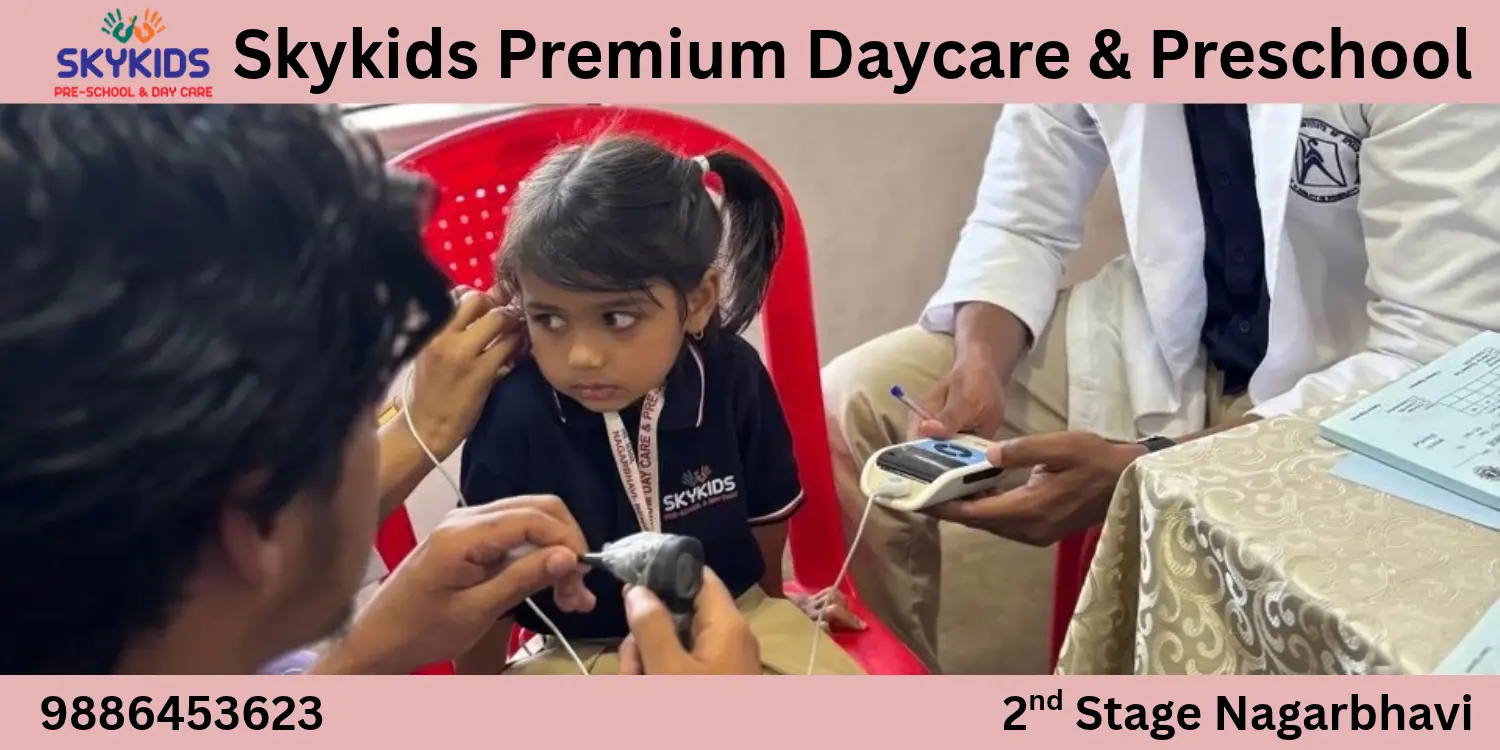
A child may look perfectly healthy and active, but a routine Health checkup can give parents a clearer picture of their child’s growth, development, and overall readiness for preschool. Regular checkups help track physical health, development, nutrition, vision, hearing, immunizations, and concerns that may otherwise go unnoticed. Starting preschool is an exciting milestone. Your little one is getting ready to meet new friends, explore a new environment, follow routines, participate in activities, and spend time away from home.
Naturally, parents have many questions:
A routine health checkup can help answer many of these questions and give parents an opportunity to discuss concerns with a qualified pediatrician. For families in Bengaluru, where toddlers are beginning preschool and daycare at different ages, making preventive healthcare part of the school-readiness routine can be a simple and reassuring step.
A School health checkup is not about looking for problems in every child. It is mainly about knowing how your child is growing and identifying any concerns early, so parents can discuss them with the right healthcare professional.
Regular well-child visits generally include assessment of growth and development, immunization review, and an opportunity to discuss nutrition, sleep, behaviour, safety, and other concerns. For a toddler preparing to start preschool, this information can be particularly useful because the child is entering a new daily environment.
The exact examination depends on the child’s age, medical history, and the pediatrician’s assessment. A doctor may look at several areas of health and development.
One of the simplest reasons for Regular checkups is to monitor how your child is growing.
The pediatrician may review:
Looking at growth over time can be more useful than focusing on a single measurement.
If parents have concerns about eating, weight gain, energy levels, or physical development, a checkup provides an opportunity to discuss them.
Preschool is not only about learning letters and numbers. Children are also developing their language, movement, social skills, thinking, and emotional abilities.
Developmental monitoring looks at how a child plays, learns, speaks, acts, and moves over time. If a parent or healthcare professional notices a concern, further developmental screening may be recommended.
Depending on age, parents may discuss things such as:
The important point is that children develop at different rates. A developmental concern does not automatically mean that something is wrong. It simply means it may be worth discussing with a pediatrician.
Yes, when clinically appropriate, a pediatrician may assess or recommend screening for hearing or vision concerns. This can be particularly useful before preschool because children use their eyes and ears constantly while learning. Imagine a child who seems uninterested when the teacher speaks from across the classroom.
There could be many explanations. Perhaps the child is shy, distracted, adjusting to the new environment—or perhaps they are having difficulty hearing. Similarly, a child who struggles with activities involving pictures, books, or objects may simply be learning at their own pace, but vision should also be considered if there are concerns. Health professionals can decide whether further screening is appropriate.
Vaccination is another important part of preventive child healthcare. Parents should keep their child’s vaccination record and discuss it with their pediatrician to understand whether recommended vaccines are up to date according to the child’s age and individual circumstances.
The Indian Academy of Pediatrics provides immunization guidance and resources, including its current immunization guidebook. Rather than relying on a general internet checklist, parents should speak with their child’s pediatrician about the appropriate schedule for their child.
Keep a photo or digital copy of your child’s vaccination record. It can make it easier to check records when needed.
Absolutely. Toddlers can be wonderfully unpredictable eaters. One day they may happily eat idli and vegetables. The next day, they may refuse everything except one particular snack!
During a routine visit, parents can discuss concerns about:
A pediatrician can provide advice based on the child’s individual needs rather than general advice from social media.
Starting preschool often means adjusting to a new routine. Your child may need to wake up earlier, get ready, eat breakfast, travel to school, participate in activities, and eventually follow a consistent rest routine.
If your toddler has ongoing difficulties with:
these are useful topics to mention during a pediatric visit. Regular checkups are an opportunity for parents to discuss everyday challenges, not just illnesses. The AAP specifically encourages parents to raise concerns about areas such as development, behaviour, sleep, eating, and family routines.
A medical checkup does not determine whether a child is “ready” for preschool by itself. Preschool readiness includes many areas, including:
A pediatrician can help parents understand health or developmental concerns that may affect daily participation. At the same time, parents and early educators observe the child’s everyday behaviour in different settings. This is why parents, healthcare professionals, and educators can all play different but complementary roles in supporting young children.
One of the biggest benefits of regular monitoring is that it gives parents a chance to notice concerns early. The CDC explains that developmental monitoring and screening can help identify potential developmental delays and connect children and families with appropriate support as early as possible.
For example, if parents notice that their child is having difficulty with speech, movement, social interaction, or another developmental area, they do not have to wait until the child enters school to ask about it.
They can start the conversation with their pediatrician. Early attention does not mean labelling a child. It means understanding what support, if any, may be useful.
No.
Every child is different.
A toddler’s healthcare needs can depend on factors such as:
That is why parents should not compare one child’s checkup schedule or medical recommendations with another child’s.
Your child’s pediatrician can guide you based on their individual situation.
Sometimes parents remember their concern only after leaving the clinic! Before the appointment, make a small list.
If something has been worrying you, mention it, even if it seems small. Parents know their children well, and sharing observations can help the healthcare professional understand the bigger picture. The CDC also encourages parents to discuss developmental concerns and any loss of previously acquired skills with their child’s doctor.
Some children become nervous when they hear the word “doctor.” You can make the experience calmer without making big promises.
Talk positively:
Explain that the doctor will check how they are growing and feeling.
Use simple words:
Avoid complicated medical explanations.
Play doctor at home:
Let your child pretend to check a toy’s heartbeat or temperature.
Take a familiar toy:
A favourite small toy can provide comfort.
Be honest:
If you know a particular procedure may feel uncomfortable, don’t promise that “nothing will hurt.”
Stay calm:
Children often notice a parent’s anxiety.
The goal is not to make the appointment completely stress-free. It is to help the child understand that visiting a healthcare professional is a normal part of taking care of their health.
Here is a simple preschool health checklist you can keep handy.
☐ Schedule regular pediatric visits
☐ Review your child’s growth
☐ Discuss developmental milestones
☐ Check vaccination records
☐ Discuss hearing or vision concerns
☐ Talk about nutrition and eating habits
☐ Discuss sleep and daily routines
☐ Mention any recurring health concerns
☐ Keep emergency contact information updated
☐ Keep important medical information accessible
This checklist is a preparation tool—not a substitute for individualized medical advice.
A child’s wellbeing does not begin and end at the school gate. Parents understand the child’s home routines, habits, preferences, and health history. Teachers observe the child during play, group activities, meals, communication, and social interaction. At SkyKids Preschool, Nagarbhavi, we believe that children’s safety and wellbeing are an important part of their early learning experience.
Our approach includes age-appropriate activities, caring supervision, communication with parents, and attention to children’s everyday needs. A preschool should not replace a pediatrician. Instead, parents, healthcare professionals, and educators can work together, with each playing their own role. This kind of communication can help create a more supportive environment for young children.
This is one of the most common questions parents have. A child can look active, energetic, and happy while there are still questions worth discussing with a healthcare professional.
Regular checkups provide an opportunity to:
Monitor → Discuss → Understand → Act when needed
The purpose is not to make parents anxious. It is to help them stay informed about their child’s health and development.
Starting preschool is a major change in a toddler’s life. There will be new faces, new routines, new sounds, new activities, and plenty of new experiences. When parents have already discussed their child’s health and development with their pediatrician, they may feel more informed and prepared for this transition. And that reassurance matters too. A confident parent can often help a child approach new experiences with greater calm and security.
A regular well-child visit is a good opportunity to review your child’s growth, development, immunizations, nutrition, and any concerns before or around the time they begin preschool. The appropriate timing depends on your child’s age and healthcare schedule.
Depending on age and individual needs, it may include growth assessment, physical examination, developmental discussion or screening, immunization review, and discussion of nutrition, sleep, behaviour, and other concerns.
A pediatrician can discuss your child’s health and development, but preschool readiness involves more than medical health. Communication, social skills, independence, routines, and emotional adjustment also matter.
Talk with your child’s pediatrician. Developmental monitoring helps identify concerns, and further screening or evaluation can be considered when appropriate.
Parents should follow the preschool’s requirements and share relevant information needed for the child’s safety and care, particularly allergies, medical conditions, emergency contacts, or other important instructions.
Your child’s first preschool experience is about much more than ABCs, numbers, and classroom activities. It is also about health, safety, communication, routines, relationships, and feeling comfortable in a new environment. Regular health checkups can help parents keep track of their child’s growth and development, discuss concerns early, and stay informed about preventive healthcare.
You don’t need to know everything before your child starts preschool. You simply need to ask questions, keep important health information updated, and work together with your child’s pediatrician and preschool team. At SkyKids Preschool, Nagarbhavi, we believe that when children feel safe, cared for, and supported, they have a stronger foundation for exploring and learning.
A healthy start is one more way we can help little ones take their first steps into preschool with confidence.
Regular health checkups + caring adults + safe routines + open communication = a more supported preschool journey.
Note :- This article is for general educational information and does not replace advice from your child’s pediatrician or other qualified healthcare professional.

Passionate Educator | Child Development Advocate | 15+ Years in School Leadership I believe every child deserves an education that nurtures curiosity, confidence, and character. At Skykids Preschool, we focus on creating a joyful learning environment where students explore academics, creativity, and values together.




Comments are closed